
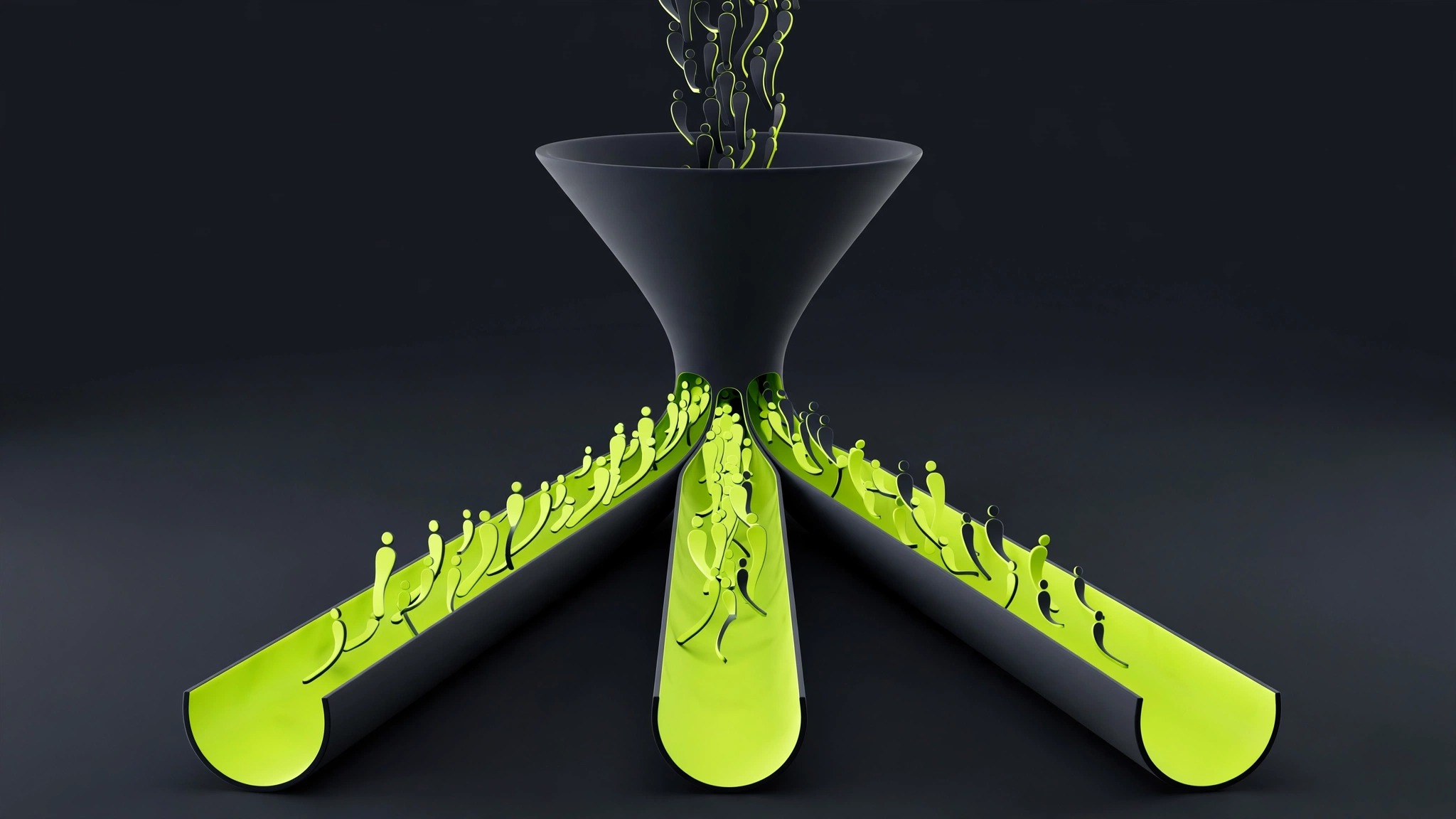
Sending every email to your entire list is the fastest way to make a good list perform like a bad one. The people who bought yesterday, the people who have never bought, and the people who have not opened an email since last winter do not need the same message, and inbox providers notice when you pretend they do. Segmentation is how you stop pretending.
This guide covers what segments are, how they differ from lists and tags, and the core set every Shopify account should build.
Lists, segments and tags: the difference that matters
A list is a static bucket people join at a signup point: your newsletter list, your SMS list. Lists are mainly about consent and source. A segment is a live definition: “anyone who has ordered at least once and opened an email in the last 60 days”. Klaviyo recalculates segments continuously, so people flow in and out as their behaviour changes, with no manual updates. A tag is a manual label you stick on profiles, useful for one-off groupings like event attendees or competition entrants.
Rule of thumb: if the definition involves behaviour, time or purchase history, it should be a segment. If it involves where someone signed up, it is a list. If a human decided it, it is a tag.
The three ideas behind every good segment
Recency: when did they last engage or buy?
Recent behaviour predicts future behaviour better than anything else. Someone who opened an email last week is a fundamentally different audience from someone who last opened nine months ago, even if everything else matches.
Frequency: how often do they buy or engage?
Repeat buyers are your profit centre. One-time buyers are your biggest opportunity. Never-buyers are a different conversation again. Frequency splits your list into groups that deserve genuinely different offers and tone.
Monetary value: how much do they spend?
High spenders should hear about premium products and early access first. Bargain-driven buyers should see value ranges and bundles. Sending the luxury launch to your most price-sensitive segment wastes the launch and the segment.
Marketers call this RFM. You do not need the acronym to use the thinking. Every strong segment below is just recency, frequency and value combined with a purpose.

The core segments every account needs
Engaged segments: 30, 60 and 90 days
Your default campaign audiences. Build all three, defined by opens, clicks, site activity or purchases within the window. Send routine campaigns to the 60 or 90 day group, important launches can stretch wider, and treat anything beyond 90 days of silence as a different audience entirely.
VIPs
Define them by some blend of order count and lifetime spend that fits your store, for example your top slice of customers by both. VIPs get early access, first looks and the occasional genuine thank you with nothing to buy. They are also the worst people to train to wait for discounts.
Potential VIPs and repeat-buyer prospects
Customers with two or three orders and rising frequency. A nudge here, a relevant cross-sell, a loyalty invitation, can move them into the VIP group, which is far cheaper than acquiring a new customer of the same value.
Lapsing and lapsed customers
Buyers approaching and passing your normal repurchase window. These segments power your winback flow and your reactivation campaigns, and they should be excluded from regular launch sends once they go quiet, so their silence does not drag down your engagement rates.
Subscribed but never purchased
Engaged non-buyers are pure potential. They read, they click, they have not committed. They respond to bestseller proof, reviews, first-order reassurance (returns, delivery, guarantees) far better than to another product grid.
Interest and category segments
Built from viewed products, collections browsed and past purchases. The skincare buyer and the supplement buyer in the same store should not receive identical launches. Category segments are what make campaigns feel personal without any creepy tricks.
Location segments
Country or region segments handle currency, delivery promises, seasonal relevance and compliance differences. A winter coat campaign to your Australian list in their summer is the kind of mistake segments exist to prevent.
Quick check: is your segmentation doing its job?
Answer 3 quick questions and get an instant score.
Who receives your routine campaigns?
How many segments do you actively use?
How do you treat lapsed buyers?
Using segments day to day
Segments do three jobs. They are campaign audiences: most sends go to an engaged segment, with exclusions for recent purchasers of the featured product (they do not need the launch email for what arrived yesterday). They are flow filters: conditions that stop a flow when someone no longer qualifies, such as leaving the abandoned checkout flow the moment an order is placed. And they are diagnostics: comparing revenue per recipient between your engaged 30 and engaged 90 tells you how much list fatigue is costing you.
Keep the set small and named clearly
Segment sprawl is real. Fifty overlapping segments with names like “Test 3 FINAL” help nobody. Keep a core set of around ten, name them by definition (“Engaged 60: opens, clicks, visits, orders”), add a description when you create them, and review quarterly. Retire segments nobody has sent to in six months.
Start with the engaged windows and the never-purchased group. Those three alone will change how your campaigns perform within a month.
Segmentation is built into our Klaviyo management service from day one. If your account is still sending to the full list, talk to us about what that is costing you.
Frequently asked questions
What is the difference between a list, a segment and a tag in Klaviyo?
A list is a static bucket people join at a signup point, and lists are mainly about consent and source. A segment is a live definition based on behaviour, time or purchase history, recalculated continuously so people flow in and out as things change. A tag is a manual label a human sticks on profiles, useful for one off groupings like event attendees or competition entrants.
What does RFM mean in Klaviyo segmentation?
RFM stands for recency, frequency and monetary value: when someone last engaged or bought, how often they buy or engage, and how much they spend. Recent behaviour predicts future behaviour better than anything else. Repeat buyers are your profit centre, and high spenders should hear about premium products and early access before price sensitive buyers see value ranges and bundles. Every strong segment combines these three ideas with a purpose.
Which segments should every Shopify store build first?
Start with the engaged windows and the subscribed but never purchased group. Build engaged segments for thirty, sixty and ninety days, defined by opens, clicks, site activity or purchases, and use them as your default campaign audiences. Then add VIPs, potential VIPs, lapsing and lapsed customers, interest and category segments, and location segments. Those first groups alone will change how your campaigns perform within a month.
How many Klaviyo segments does an account actually need?
Fewer than most accounts end up with. Segment sprawl is real, and fifty overlapping segments with unclear names help nobody. Keep a core set of around ten, name them by their definition, add a description when you create them, and review the set quarterly. Retire any segment nobody has sent to in six months, so the account stays understandable to whoever manages it next.
How are segments used beyond choosing campaign audiences?
Segments also work as flow filters and as diagnostics. As filters, they stop a flow when someone no longer qualifies, such as leaving the abandoned checkout flow the moment an order is placed. As diagnostics, comparing revenue per recipient between your engaged thirty day and engaged ninety day segments tells you how much list fatigue is costing you, and where your sending is too wide.